
Demo Automation Software: The Complete 2026 Guide for SaaS Teams
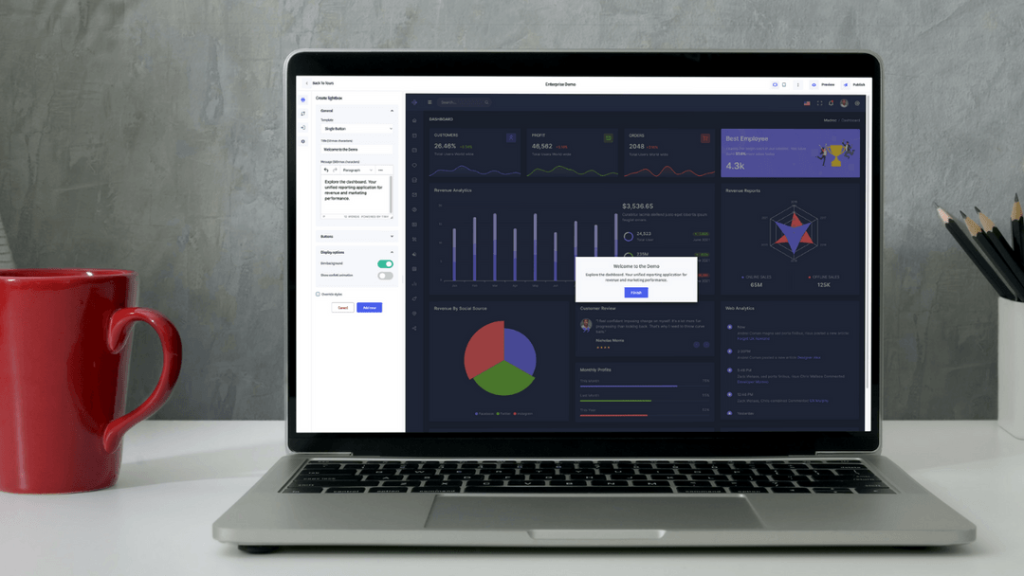
Key Takeaways
- Demo automation software lets SaaS teams create and deliver self-serve product demos that run 24/7 without a live sales call.
- Teams using demo automation software report up to 78% shorter sales cycles and a 30% drop in unqualified demos.
- The three core types are interactive demos, async video demos, and AI demo agents.
- Must-have features: no-code builder, buying intent tracking, multiple demo formats, CRM integration, and white-labeling.
- Pricing ranges from $99/month for small teams to $600+/month for enterprise platforms like Consensus.
- Dale delivers enterprise-grade demo automation software starting at $99/month, with intent tracking on every plan.
What Is Demo Automation Software?
Demo automation software is a tool that lets SaaS teams create self-guided, interactive product demos that prospects can explore on their own, without booking a live sales call. Instead of scheduling a rep, buyers click a link and experience the product on demand, at any hour.
Think of it as your best sales engineer working 24/7. The software captures your product interface, turns it into a clickable walkthrough, and tracks exactly how each prospect engages.
Here’s why this matters. Modern B2B buyers have changed. Research from Gartner shows that 72% of B2B buyers now expect a self-serve, digital-first experience when evaluating software. They don’t want to wait for a Tuesday demo slot. They want to see your product now.
It solves that problem, removing the friction between “I’m curious” and “I understand the value.” And it does this at scale, for every visitor, without adding headcount.
How Does Demo Automation Software Work?
The software works in four simple steps. Let’s break each one down.
Step 1: Capture your product. You record your product flows or capture screenshots using a browser extension or no-code editor. The software turns these into an interactive replica of your interface.
Step 2: Build the demo. You add tooltips, guided steps, and messaging. Good demo automation software lets you do this without writing a single line of code. Marketing and sales teams build demos themselves, no engineering required.
Step 3: Share and embed. You deploy the demo wherever buyers are. Embed it on your website, drop it in email sequences, or add it to review sites like G2. The demo runs on autopilot.
Step 4: Track engagement. This is the magic. The software captures buying intent data, showing who viewed the demo, which features they explored, how long they stayed, and whether they shared it internally.
That last step is what separates these tools from a simple screen recording. You’re not just showing your product. You’re learning exactly who’s interested and what they care about.
Why SaaS Teams Need Demo Automation Software in 2026
Let’s be honest. The old demo model is broken. Here’s the data that proves it.
Nearly half of qualified leads never book a demo because of scheduling friction. B2B buying groups now include six to ten decision-makers, according to Gartner, and getting them all on one call is nearly impossible. Meanwhile, buyers spend only 17% of their time meeting with vendors.
The right tooling fixes all three problems. Here’s how.
It eliminates scheduling friction
When prospects explore your product instantly, you stop losing the 45% who abandon during scheduling. The demo happens the moment interest peaks, not three days later.
It shortens the sales cycle
Companies that automate their demos see almost 80% shorter sales cycles. Why? Because buyers self-educate before the first call, arriving pre-qualified and ready to talk specifics.
It scales without adding headcount
Your team stops running the same demo 15 times a week. One well-built automated demo serves unlimited prospects simultaneously. That frees your reps to focus on closing.
It surfaces qualified leads
Buying intent data reveals which prospects are ready to buy. Instead of guessing, your team focuses on accounts showing the strongest signals. This is why automated demos reduce unqualified demos by roughly 30%.
Types of Demo Automation Software
Not all of these tools work the same way. In 2026, the category splits into three main types. Understanding the difference helps you pick the right tool.
Interactive demos (click-through tours). These are self-guided HTML walkthroughs of your product. Prospects click through at their own pace. Best for website embeds, top-of-funnel education, and letting buyers explore independently.
Async video demos. These are personalized recorded videos that adapt to the viewer. Best for multi-stakeholder sharing and buyer enablement, where a champion forwards the demo to their committee.
AI demo agents. The newest category. These use AI to run live, conversational demos that answer questions in real time. Best for inbound, high-intent moments where a buyer wants immediate answers.
The strongest SaaS teams don’t pick just one. They combine formats across the funnel: interactive demos for awareness, video for enablement, and live conversations for closing.
Must-Have Features in Demo Automation Software
When you evaluate these platforms, focus on the features that actually drive results. Here are the five that matter most.
No-code demo builder
Your product changes constantly. If updating demos requires developer time, you’ll always fall behind. The best platforms let any team member build and edit demos in minutes, no code needed.
Buying intent tracking
This is non-negotiable. You need to see who viewed your demo, what they explored, and how long they engaged. Without intent data, you’re flying blind. Look for tools that include this on every plan, not just premium tiers.
Multiple demo formats
Different buyers consume content differently. Your platform should support single tours, linear guided paths, and branched journeys where prospects pick their own path.
CRM integration
Demo engagement data needs to flow into HubSpot, Salesforce, or Pipedrive automatically. Manual CSV exports aren’t a workaround. They’re a liability that leaves your sales team blind.
White-label capabilities
Your demo should feel like your product, not a third-party tool. White-labeling means custom domains, branded styling, and no vendor logos. This builds trust and keeps the experience seamless.
Demo Automation Software Pricing: What to Expect
Pricing spans a wide range in 2026. Most tools fit into three tiers. Here’s the breakdown.
| Tier | Monthly Price | Best For |
|---|---|---|
| Entry / SMB | $99–$199 | Small teams, startups, founders |
| Mid-market | $200–$500 | Growing GTM teams (5–20 people) |
| Enterprise | $600–$1,200+ | Large teams, complex multi-product sales |
Watch out for hidden costs. Per-seat fees can turn a $99 base into $350+ as your team grows. Demo view limits can cap you right when a campaign takes off. And “free trial” sometimes means “free until you need setup help.”
For most small to mid-market SaaS teams, a transparent flat rate beats per-seat pricing. That’s why platforms like Dale, starting at $99/month with intent tracking on every plan, appeal to growing teams that can’t justify enterprise costs.
How to Choose the Best Demo Automation Software
Choosing the best tool comes down to four questions. Answer these honestly and the right tool becomes clear.
How fast can you launch? Founders can’t afford a two-week onboarding cycle. The best tools get your first demo live within hours, not weeks.
Is the pricing transparent? Per-creator billing traps are real. Check the 3-year total cost, not just the sticker price. A tool that costs $99 for one person shouldn’t quietly become $350 for five.
Does it track intent well? Engagement data is the whole point. If demo analytics don’t flow into your CRM in real time, your sales team can’t act on them.
Will it grow with you? Pick software that scales across use cases, from marketing website tours to sales outreach to customer onboarding, without forcing an upgrade at every turn.
Demo Automation Software vs. Live Demos: When to Use Each
Automation doesn’t replace live demos. It replaces the low-value ones. Here’s the simple rule.
Use automated demos for early discovery, multi-stakeholder sharing, and website self-service. These are the stages where a live call is premature or impractical.
Use live demos for qualified, high-intent prospects and complex Q&A. These are the moments that need human judgment.
The two work best together. Automated demos qualify and educate. Live demos close. When you combine them, your reps spend their time only on deals that are ready to move.
How Dale’s Demo Automation Software Helps Growing Teams
Dale is demo automation software built for small and mid-market B2B SaaS teams that need enterprise capability without enterprise pricing.
Here’s what Dale includes on every plan:
- No-code builder to create demos in minutes, no engineering required.
- Three demo formats: single experience, linear guided paths, and branched journeys.
- Buying intent tracking on every tier, so you see who’s engaged and ready to buy.
- White-label capabilities across all plans, so demos feel like your product.
- Transparent pricing starting at $99/month, roughly one-sixth the cost of enterprise tools.
While enterprise platforms like Consensus charge $600+/month and gate intent data behind premium tiers, Dale gives growing teams the essentials at an accessible price. You get sophisticated demo automation software without the complexity, long onboarding, or budget-breaking cost.
Conclusion: Demo Automation Software Is No Longer Optional
In 2026, demo automation software has moved from nice-to-have to necessity. Buyers expect to explore your product on their own terms, instantly. Teams that meet that expectation win more deals, faster.
The data is clear. Automated demos shorten sales cycles, eliminates scheduling friction, scales without headcount, and surfaces your most qualified leads. The only question is which tool fits your team.
For growing SaaS teams, the answer is demo automation software that balances capability with cost. You don’t need to overpay for enterprise features you won’t use. You need the essentials done well, at a price that makes sense.
Ready to see demo automation software in action? Explore Dale’s self-serve product tours and start turning curious visitors into confident buyers, no sales call required.
[INTERNAL LINK: See Dale’s demo automation features] [INTERNAL LINK: Compare demo automation software pricing] [INTERNAL LINK: How to shorten your B2B sales cycle]
Frequently Asked Questions
What is demo automation software?
Demo automation software is a tool that lets SaaS teams create self-guided, interactive product demos that prospects explore on their own, without a live sales call. It captures your product interface, turns it into a clickable walkthrough, and tracks how each prospect engages so your team knows who’s ready to buy.
How much does demo automation software cost?
Demo automation software costs between $99 and $1,200+ per month in 2026. Entry-level tools for small teams start around $99/month, mid-market platforms run $200–$500/month, and enterprise solutions like Consensus start near $600/month. Watch for per-seat fees and view limits that increase the real cost.
What are the best demo automation software tools in 2026?
The best demo automation software depends on your team size and needs. Popular options include Dale for small to mid-market teams needing affordable pricing, Consensus for enterprise video demos, Navattic and Storylane for interactive tours, and newer AI demo agents for conversational demos. Prioritize no-code building, intent tracking, and CRM integration.
Does demo automation software replace sales reps?
No. Demo automation software replaces low-value repetitive demos, not sales reps. It handles early discovery, multi-stakeholder sharing, and website self-service, while your reps focus on qualified, high-intent prospects and complex negotiations. Automated demos educate and qualify; human reps close.
How does demo automation software shorten the sales cycle?
Demo automation software shortens the sales cycle by letting buyers self-educate before the first call, eliminating scheduling delays, and enabling multiple stakeholders to review the product simultaneously. Companies report up to 78% shorter sales cycles because prospects arrive pre-qualified and ready to discuss specifics.
What features should I look for in demo automation software?
Look for five key features in demo automation software: a no-code demo builder, buying intent tracking on every plan, support for multiple demo formats, CRM integration with tools like HubSpot and Salesforce, and white-label capabilities so demos match your brand.